


Daniel Ranta has spent the last five years responsible for a massive knowledge management implementation at General Electric integrating hundreds of communities, unifying search, and delivering expertise connectivity that enabled transformative new capabilities across the organization. He joins us today to share his experience in building KM systems and architecting knowledge networks that work, and some guidance if you find your efforts are coming up short.
Links & Notes
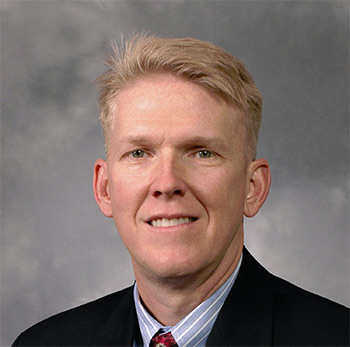
Daniel Ranta
President at DR Consulting
Transcript
Pete: Welcome to Shared Insights the podcast from BA Insight. I’m Pete Wright and I am joined today by Daniel Ranta. Dan has spent the last five years of his considerable career responsible for a massive knowledge management implementation at General Electric integrating hundreds of communities, unifying search, delivering expertise connectivity that has enabled transformative new capabilities across the organization. And he joins us today to share his experience in building KM systems and architecting knowledge networks that work, and to share some guidance, if you find your efforts are coming up short. Dan Ranta welcome to the show.
Dan: Well, Pete, thanks for having me. I appreciate the opportunity to be part of this BA Insight podcast.
Pete: Well, it’s been exhilarating for a nerd like me to read about your background and the work that you’ve done in creating some exceptional and exceptionally findable resources for so many people. You wake up in the morning, you’re a few years into doing this work, how do you know you’re doing it right? What are the signals that you’re looking for as you watch behavior across the organization that lets you know, “You know what? We’re hitting on important transformation with what we’re doing.”
Dan: I’m going to go right to my team because you build a team and in building that team, if you can imagine a pyramid, you’ve got to make sure that you take that pyramid and push it down. And when your team members are all functioning at a very high level independently, and we’re all out there providing that trusted advisor guidance and doing so with so many different customers, because it’s a small team that plays big. When you work in knowledge management, typically that’s what you’re going to find. And I had some team members in Europe, some in our Global Research Center with GE in upstate New York and then in Bangalore India and all the team members were fantastic. And our ability to function at a very high level independently, and then when we were together as well, and to be able to constantly be listening to our customers, to come up with new ideas, feed those back into our program, our overall ecosystem, that really was, for us, that was critically important for our success every single day.
Pete: In terms of overall size of implementation, I think GEs is probably the one that impacts the most employees, right? And the most team members. Let’s talk a little bit about transparency, you’re an advocate of transparency. When you start your work on strategy and architecture of a knowledge system, how do you ensure transparency and what are the tools you use to deliver on the promise of transparent development?
Dan: Well, the very first thing that we did was we invited all of, what I thought would be the key brokers, because one of the big challenges when I got to the company was that we found over 75 people with some type of knowledge management role across the company. Now imagine how difficult that was, just everyone’s got these ideas, everyone’s running in different directions, follow the shoe, follow the gourd. You may remember that from Monte Python?
Pete: Right, right.
Dan: And with an over overemphasis, quite frankly, on technology solutions. And I wanted to make sure that we had that opportunity to bring everybody together and to listen to everybody, and not spend a lot of time, we had no time because of the transformational nature of what the company was actually going through at the time, this was late in 2015. We needed to get a strategy together where people were stacking hands and then go from strategy to action as soon as possible. Now it’s really simple to say those words, “Let’s go from strategy to action.”
Pete: Yeah, right, let’s do that on Wednesday.
Dan: Exactly, so it will be done on Friday. And so the point is, is that you’ve got to be able to establish in this… Let’s be frank about when you talk about building a better collaborative culture, there’s so much ambiguity and different people will get different ideas in their minds about how it is that we’re going to go about doing that. So we had to bring everybody together to stack hands and start the process of creating a transparent, back to your question and your point, strategy and then show it to everybody and then just constantly make sure that that overall strategy was always open to being agile and to changes.
Dan: And one of the first things we did, central to our program were our communities, communities of practice. Now GE had a long history of… Every company does basically, somebody in knowledge management can tell you, you got to create these affinity groupings, whether you call them centers of excellence or networks of knowledge and knowledge networks, whatever it might be. And we started our fifth community, and this is a little bit risky, you had no value, you’re really creating. And our program was a community about knowledge sharing, so as a knowledge sharing community about knowledge sharing and what are you going to talk about there? Well, we’re going to just be transparent, back to your question and your point Pete, in that you want everybody… Because you can be great in this area, and I could sit here and tell you how great I am and all that kind of thing, but you got to listen because 75% plus is my contention, always working with large global companies that your best ideas come from the people.
Dan: And you can’t listen to every idea. You’ve got to have this utilitarian mindset where the greatest good for the greatest number. But so many times somebody will come up with something and you’ll be like, “Holy smokes. I mean, what’s wrong with me? I’ve been drinking coffee all day long, but I didn’t have that idea.” And that’s okay and you figure out a way to incorporate into your program, the processes and the behavioral change that you’re looking to create.
Pete: You dropped this term knowledge brokers earlier. I wonder if you could talk a little bit more about the importance, the value of a knowledge broker, or how do you define a knowledge broker and why are they so important? My hunch that this might get us into something that is deeply important to us at BA Insight, which is that increasing the sort of emergent knowledge that comes out of bringing search to corners of the organization that we might not normally seek.
Dan: Well, I’m glad you brought that up, Pete, because it really is… It becomes a central part of any successful program, regardless of what you’re doing. I’m going to refer back to, Malcolm Gladwell wrote a trilogy of very famous books that feed right into building a knowledge sharing culture and collaboration and the first of which was called The Tipping Point that came out in 2011. It was a great, great, great piece and he’d talked about salespeople, connectors, mavens, those were three key terms that he used to be able to start a positive epidemic or revolution. And that small team playing big, that I talked about a few moments ago, you can’t do it with without these brokers that will exist, and in our case we had nine businesses and nine verticals and I mentioned all the knowledge management folks.
Dan: And you want to be able to kind of proliferate that positive messaging that goes out and talk to other people to build that revolution across the company and to be able to transform. Any transformation is going to require the behavior of key brokers, and brokers, whether they’re connectors, just simply connecting different groups or their liaisons, or they’re helping overcome different challenges and advocating on your behalf are going to be critically important when you’re trying to start them a program like we were trying to start with relatively little in terms of budgetary resources. So you’re going to count on the energy of the people, those energy givers with can do attitudes, to be able to be out there and advocating and brokers are so important. And it goes right back to what Malcolm Gladwell talked about, and then he carried it on with his other books, including Blink and Outliers.
Pete: Exceptional trilogy, if you haven’t read them, get those books. This leads us into a question I had about your killer app, right? And I love the way you’ve talked about this because it not only sort of proves the technology on the backend, but it provides a key lead feature in establishing buy-in for these broad communities that something great is in continuous development with their participation, it’s going to change their lives. I’m referring of course, here to your asynchronous discussion area and expertise finder. Can you talk about how that sort of technology, that area of your application actually improves its own, sort of becomes its own avalanche?
Dan: Well, this starts to get into three themes that I want to bring forward today, and that’s governance and taxonomy and then curation. And it also feeds into the fact that people for years, since the early ’90s, talking about knowledge management and have referred to people processes technology, but of those three elements the thing that’s most forgotten is the process. And so basically I’ve dealt with a lot of engineering culture, so we have about 60,000 engineers at GE. And what we were trying to position was the ability with the asynchronous discussions, it kind of makes me laugh because when I worked at E&Y way back in the mid ’90s, everyone’s like, “Hey, asynchronous discussion, that’s the greatest thing since whatever.”
Dan: And I mean, we all participated. So we have this familiarity index now that whether we’re in work or we’re outside of work to set expectations, Pete, then we’re all very, very familiar with what this really means. So for us central to being able to start to unearth the right types of behaviors and to continue that forward was to make sure that it was focused on problems solving and to make sure that we were encouraging people to demonstrate human vulnerability and asking questions of others. And then it gets into this other area of, operational excellence another key, very ambiguous term. What the heck does operational excellence mean? Yeah, you want to be excellent as you’re operating, but what else does it mean? But to me, it means that work is so much more often an art than a science.
Dan: If it’s a science, if it’s some discreet tasks that I’ve accomplished 99 times perfectly, I don’t need to ask anybody, but if it’s something I haven’t done before, and if I’m not sure of these different elements or components that may come into play, I want to be able to make sure that I have the confidence and the reaching out and have established kind of the overall trust in a collaborative culture. And it gets back to that central piece that I talk about all the time, the behavioral aspects, to be willing to go out there and ask a question of fellow engineers without worrying that somebody is going to say, “Oh, can you believe Dan and asked that question? He must be a real knucklehead.” Or something like that.
Dan: That’s the kind of thing that helps to create this process where everyone feels welcome. And that collective elaboration that then comes into play. And the way that we did at a GE is better than any other company, I got to tell you. In that what we did was we combined it with our taxonomy and really the capabilities that existed across different communities within different businesses in the company, to be able to get people to go out and to nominate their expertise. We weren’t calling people experts. It’s a lot softer and more effective when you say expertise, so we’re nominating expertise.
Dan: And then our asynchronous discussion automatically fed based on how maybe a question was tagged. It automatically fed that so that we weren’t just overwhelming people, collaborative overload is a real thing within companies these days, within large companies, especially. And so we wanted to make sure that we were delivering knowledge precisely or surgically to the right people.
Dan: So if you have groups of people with expertise, then your ability to curate, and to be able to take some knowledge, that’s more of an art than a science and to be able to build on that knowledge, as it goes forward is critically important. Then that is what… You take a world class company in search like BA Insight and you start to then take that knowledge that’s being created by people around the world that may never even meet face to face, that’s the kind of curation and the knowledge processes that I’m talking about, so that that knowledge can be fed into a search engine effectively. So that you get to a point eventually where before I even asked the question, maybe this question’s already been asked? Maybe it already has a really nice answer with a lot of nice knowledge objects that I can take a look at to be able to discover even more.
Dan: And before I even asked my question, I search and I find something because what I ultimately want to do within a company is to make sure that we’re making this smaller place and that the search, the findability and our ability to find, and then reuse that knowledge is right there at our fingertips. If not, you know what happens? You know the classic phrase and knowledge management, everyone’s recreating the wheel and that’s what you want to avoid.
Pete: Well, then you have to talk about the Wiki as a service initiative. Because here, what I’m hearing is you found a way to take these sorts of discussions, the asynchronous discussions, that from which new insights and new sort of powers emerge as a result of these discussions and turn them into cannon by leveraging GEs extraordinary assets, I think, to be able to do this quickly and incorporate them back into the searched operations. Can you talk a little bit about that?
Dan: Absolutely, I’m glad you tee that up for me, Pete, because this is a dream I’ve always had. I first heard about it… And this is why benchmarking is so important, I really believe in benchmarking and learning from other companies. And I first heard this from Shell, Shell Oil Company. There’s a lot of oil companies that have had a really nice history when it comes to building KM systems and knowledge sharing cultures. And Shell was doing this, but… And I dreamed about it and I was jealous because we didn’t have the resources when I was in charge of knowledge at ConocoPhillips to be able to pull this off. So we were able to create based on what I just talked about and the asynchronous discussion that was really just off the charts in terms of how much activity that we had and how much of the surgical precise based knowledge was flowing to the right people, to be able to give us a better opportunity to get that really effective collective elaboration, the best answers.
Dan: So what do you do with that knowledge once you have these people fleshing out things that are highly reusable, like I talked about in the search context. Well, we had the ability too… We automated a process to be able to basically say, “Look in this asynchronous discussion, we’re going to make a decision on the fly to say, “This is really important. I want to stick a stake in the ground, and we want to create a wiki article.” So every community had its own wiki portal space, we had some just absolutely fabulous governance around how it is that we created the wiki and just a great, great resource on our team that is world-class when it comes to creating everything associated with wikis, and we were able to take the knowledge and to move it, those things that…
Dan: And this is the classic challenge when it comes from tacit is this knowledge that’s ping-ponging around inside my head, this experience-based stuff and making it explicit or available. We’re able to take that basically by clicking one button and to take what people said in this discussion and move it into a wiki article, in a fluid dynamic environment we’re able to keep building on that knowledge. What I joke about often is the fact that a PDF file is like something stuck at the bottom of my swimming pool. And who the heck… I don’t even go down to the bottom of my swimming pool, who goes down there? Who’s going to ever find that? Nobody probably, right? It’s lost knowledge. It’s in cubby holes. And that’s what a lot of companies have that’s all over the place, and that’s why again, search engines can be so important to be able to discover that type of knowledge.
Dan: But this was so cool to be able to take what people said in this sphere of where work is more of an art than a science and put it into a fluid dynamic location, like a wiki article. And then to be able to build on that because… The reason I say it’s dynamic is because it’s so easy to continue to edit. And for us the best wiki in the world beyond a shadow of a doubt is Wikipedia. Wikipedia has been around now for 18 or 19 years, and they’ve developed so much open source wise and that’s what we used at GE as our overall GE Wiki platform, and that’s what it was all about.
Dan: I must say that I’m so proud of our team for developing this and being able to create this for our customers. And I’ve seen, although Shell did it, they didn’t do it nearly as well as us. I’m very competitive, I’m a very competitive guy also and you want to win, win, win for your customers, for the business. And this is one of the ways that we were winning with knowledge processes in our overall ecosystem.
Pete: Is this something that anybody can do? I mean, I’m reading this and I talked a little bit about resources, I’m being presumptive here, that is, is this a thing that only the biggest of the big can actually accomplish?
Dan: I don’t think it is, I think that the vein of KM Teams is often the fact that it just will take some off the shelf technology, something that tends to be very ephemeral. I mean, it’s just something like…I don’t want to throw any companies under a bus. Am I allowed to do that, Pete?
Pete: I guess I can beep those.
Dan: Okay, when you take something like Slack Channels or something like that, there’s a use for that, but what I’m talking about is really purposeful collaboration. Or you take something like Yammer that’s often offered by Microsoft and it just doesn’t get the job done. Something ephemeral is like a gallon of water busting over the top of Niagara Falls. Like, “Wow, look at that gallon of water.” Boom, it’s out to the St. Lawrence Seaway, it’s headed out there. Also, where’s that knowledge, how can we get that and organize it more effectively? Well, you can’t.
Dan: And so that’s a huge challenge that a lot of companies face, but if you understand the principles, even a primitive version of what we’re talking about to take the best of this… Because many times if you look at, let’s say, I’m just going to use some very generalized number, say you have a community of a thousand people that are solving problems in a specific area of electronics for a company. And you’re going to be able to figure out what’s the framework, what are the articles, Wiki articles in this case, that we may really want to create? And maybe it’s 82 articles that you might want to start with and you can disperse the responsibility and get some titles. And some of these things that just to us seem to… we’re constantly recreating the wheel in these different areas and that type of thing.
Dan: And so there’s some basic human techniques that even a very small knowledge management team can take and be able to follow the kind of principles we’re talking about today to make determinations in, on behalf of the business, to stick a stake in the ground as far up the hill as you can go in these different areas to be able to take that tacit and move it into explicit. So I think there’s opportunities to do it, be creative, be kind of MacGyver-ish, if you will. But to fully automate it, it’s 2020, and I’m kind of surprised by the fact that what we’re talking about is so critically important in the sphere of collaboration and knowledge management, that there aren’t more technologies out there that automatically enabled this.
Pete: I love that, that the tools that you’re talking about are closing the gap between knowledge, culture, and knowledge dissemination and findability. I mean, it’s obviously it’s something that’s core to our efforts at BA Insight. So let’s talk a little bit more broadly about some of the ingredients or the things that you feel like you have to own, if you’re, 8:00 AM day one, if you’re going to be successful in architecting a knowledge management system for your organization.
Dan: Well, first two things, and this is where in the case that we’re mainly talking about today at GE, what we did was the initial focus, I called them my two Bs, business value and behavior, those two things. So we went after areas that hurt the most. One of the things, and this is important that I mention this, I talked about ephemeral, I talked about different systems that people in different companies might say, “Hey, this is all you need, just buy some licenses and this’ll be good.” And kind of let people organically create that, there’s a fallacy in that. Everyone has good intentions, I don’t want to take that away from anybody, but this is where you got to go through the front door and make sure that business value is truly going to be one of the key precepts used to establish the knowledge management ecosystem you’re talking about here, is that you’ve got to go through and find out where it hurts the most. And you want to set up a minimal amount of communities, if you will.
Dan: You don’t want just everybody in every location around the world with good intentions to be able to set up something that competes, it’s the same kind of thing. I’m going to have this community over here about whatever in oil and gas, that’s the same community in Calgary, as it is in Huston, as it is in Aberdeen or something like that. You want to bring the people together, less is more. So that’s going through the front door, finding out what main business problems we can solve. And that’s where you’re going to be able to drive the ROI, the return on investment and better business value.
Dan: And then you want to shift your focus immediately at that point to the behavior and the things we’ve talked about today on the podcast of identifying the people to be involved, the right brokers, the right leadership skills and responsibilities, and set the tone and to create all the governance around, I haven’t mentioned much about governance today. The governance to me is shared accountability, but the governance around how it is that we are going to operate and we’re going to do this. Remember less is more, and to make it as easy as possible for people because everyone has priorities and you want to be able to blend this in, to work priorities and make it part of actually how people work versus something extra. If it’s something extra, it’s number 11 on my to do list, I’m never going to get to it, I’m never going to participate. So you want to get to that point with the processes, but you start with those two Bs, the business value and the behavior, and you build off of that, everything, it kind of comes off of that.
Pete: All right, I’ve been very intentional about talking through the things that are positive, that are constructive, that can help people start today and build new things, but I feel like I’d be remiss if I didn’t ask you about the pitfalls that you may have run into in your experience. The challenges that you’ve had that you feel might be plaguing other knowledge management folks.
Dan: I think that the number one thing I’ve touched on and in a number of different ways here is this over emphasis on technology that, build it and they will come, just throw that out there and-
Pete: Just another Slack channel, Dan, just another Slack channel, it’ll be fine.
Dan: Just another Slack channel. And so that’s a huge challenge that a lot of companies face. I’ve done some work, I’ve participated in some articles with Dr. Rob Cross from Babson University on collaborative overload. And I mentioned in passing, that it’s a real thing. I talked about the fact that we’re all, the familiarity index I call it, we’re all familiar more and more now in 2020 with all these different types of technologies that can enable things and we go to work and we expect those to be there. But if there’s too much of them there, then you’re like, “Well, what do I look at? Where can I put my energy?” Because we all need to do our work priorities, what my boss finds interesting, I need to find fascinating generally.
Dan: And I tended to work in command and control cultures with a lot of engineering workforce. And so it’s a no-nonsense scenario where you want to make sure you’re really focused. And it gets back to the less is more. And you can’t get there if you’re just throwing technology out there and expecting people to organically come up with affinity groupings, whatever you might call them to be able to put those into play. And then everything gets chaotic and you end up with people competing and you’re not focused and you lose track of what it is that you’re trying to do in terms of business value.
Pete: You said something in an interview in the great book, the KM Cookbook by Chris Collison, the Paul Corney and Patricia Lee Eng. And I would like to read you to you, will you indulge me?
Dan: Go ahead.
Pete: All right, “We mandate that all leaders and coordinators of our communities are members of our knowledge sharing community. I guess I suck them in without them even knowing it, it’s the community space we use to blog and share all our governance materials for everyone to see and use and help us improve. They see the questions and the answers, they learn about the improvements to the community IT infrastructure, and they ask, “Why don’t we have this? Why don’t we have that?” That’s what we love because 75% of our best ideas have come from the business across all generations.” That passage is significant to me for a number of reasons but as we lean in toward wrapping up, you’re doing this work for a company that is 128 years old this year, truly multi-generational, what does it mean to you that your work today will likely help teams continue to change the world together in another 128 years?
Dan: Well, the first thing is crowdsourcing is a real thing, and it leads into the transparency you asked me about earlier. And there’s a word that is so important in what we’re talking about today that I’d be remiss if I didn’t mention it and it’s a simple one, and it’s learning. And so when you’re able to get all the right people into place, then you have a much better… Most learning happens on the job and through this type of community site that I’m talking about, we have 1500 people that were members of our knowledge sharing community and they were the right people. And I made sure that we had the right membership group because if they didn’t ask questions, if they didn’t help others, that’s cool because I knew that they were getting the information that was very pertinent to them in the role they’re playing in our overall governance structure and they were learning.
Dan: The other thing that I think has become a fallacy is this whole thing, I remember back in the early 2000s that everyone said, “Well, the problem we have is that all these baby boomers…” I’m a baby boomer, I was born in 1962, so those are people, theoretically, I think born between ’46 and ’64, “These baby boomers got all the knowledge, but they don’t know anything about the technology.” That may have been true, it may still be true to some extent. I mean, I can never make a statement, that’s absolutely 100% accurate, but the point is that nowadays, man, there’s a lot of super savvy baby boomers out there, I consider myself to be one of those.
Dan: And also the point is, is that that’s an overgeneralization, so for me, and when I said that part in the book chapter about across all generations, is that you never know if it’s going to be a Millennial, Gen X, Gen Y whatever you want to call younger folks, all due respect to all generations, you just never know where the best idea is going to come from. And that’s why listening when you’re developing a program, listening and having a great team become foundational to being able to continuously improve and to make it better and better and better. And that’s what we did at GE.
Pete: On behalf of Generation X, I’m sorry. What’s next for Dan Ranta? What ‘s the next mountain you’re going to be climbing here?
Dan: I have a lot of passion in this area and I’d love to share, I’d love to share the stories, and not just stories, but I love to give solutions to people. So I’m currently working with a number of very interesting companies and sharing a lot of insights and I’m willing to do it pro bono many times, because I think I really do believe that the more you share, the more you get. And the experiences that I’ve had, I just love other people that will come to me and will ask me. And I just did a presentation for Kaiser Permanente, for example, there on the West coast and they have aspirations to build a better collaborative culture. And so I’m just always willing to sit down with people and listen, and then help understand where their gaps may be. Everything in life is about gap analysis-
Pete: Seems right.
Dan: It’s figuring out where you have the opportunity to improve, right? And there’s so many ways that you can determine where those gaps are. You can’t do everything at once, but you have the ability to set the priorities to be able to get on a nice trajectory. And that’s what I like to do, I like to do with people and with companies, whether remuneration is involved or not, as I said, is to just help people. Because I got this crazy thing that I picked up on about 20 years ago that I think we’re all on earth to help each other. And I love helping people so that’s really what’s in store for me as I go forward.
Pete: Well, we deeply appreciate you helping us today. Where can people find you if they want to reach out to you to learn more about your great stories?
Dan: Well, the best place is on LinkedIn, anybody can directly send me an email at danieleranta@gmail.com, that’s cool. Just contact me, I’ll pick the phone up and call anybody anytime. And just like I said, it’s great to have conversations about the challenges that people have. And I’m always looking to learn too, I mean, learning never ends. So I fully expect that when I engage with different organizations and companies and sharing insights that I’m learning at the same time.
Pete: We sure appreciate it Dan, thank you so much for joining us today on the show. And thank you all for downloading and listening to this episode. You can find us online in the Apple Podcast and Spotify, if you want to subscribe and be notified each time a new episode is released. On behalf of the kind and exceptional Dan Ranta, I’m Pete Wright, and we’ll catch you next time right here on Shared Insights, the podcast from BA Insight.


